How to Secure Your Squarespace Website & Why You Need to!
Have you ever noticed when landing on a website that there might be a little lock icon next to the URL or a message that says “connection secure”? Well, this is a really GOOD thing and means that the website you’re on is valid and secure.
The ins and outs of website security are (honestly) pretty boring, but it's super important to ensure that your site is protected not only for your own safety, but also for the security of your visitors and customers. As a creator or business owner, you want to make sure that hackers have no chance of gaining access to the info that people trust you with.
Thankfully, Squarespace makes it super easy to secure your website with a variety of different security features, each of which we’ll go over in this post. Plus, we’ll show you exactly how you can activate automatic security for your site with just a click of your mouse so that you can feel confident that your content is protected.
Let’s dive in!

What is SSL and why is it Important?
If you've been looking into website security or have been in business for a while, you might have heard of something called SSL or SSL Certificates. Without going into too much detail, SSL is the thing that actually secures your connection and prevents hackers from impersonating your website or stealing information.
In other words, it’s mega important!
You can tell if a website has an active SSL certificate if the URL begins with https:// (not just http://).

Or, you can click on the icon to the left of a URL to see whether or not the connection is secure and learn more about the site’s cookies and settings (oh, and if you don’t see this icon, that’s a red flag).
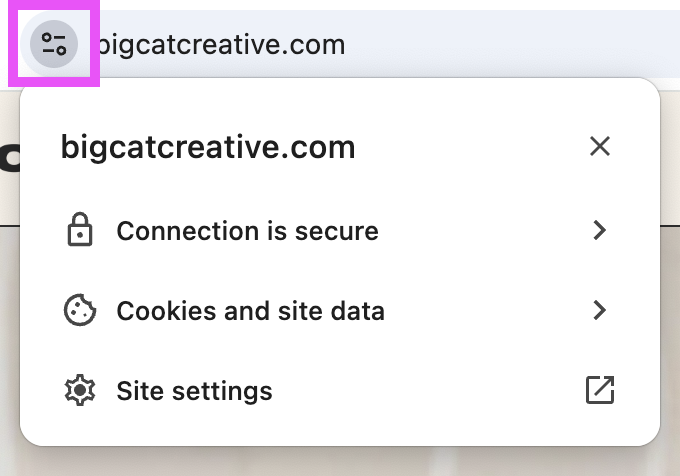
It’s important that your site visitors are able to clearly tell how secure your site is, since SSL ensures that things like login details and credit card information are protected and saved securely. It also makes sure that forms and messages sent through your website can’t be tampered with. So, if it’s not obvious that your website is protected, people might not feel safe browsing and click away.
SSL is also important for your SEO ranking. Google actually punishes websites that don’t have an active SSL certificate by pushing them further down in searches, and some search engines can block unsecured sites all together (which means no one will be able to find you). So, if you weren’t convinced before, that should be enough to get you motivated!
How to Enable SSL Certificates in Squarespace
Okay, so now that you’re aware of just how secure your Squarespace website can be, let’s dive into the exact steps you need to take to activate your SSL certificate!
All you need to do is navigate to your website’s SSL Panel, which you can find by clicking the slash key ( / ) on your keyboard and typing in “SSL”.
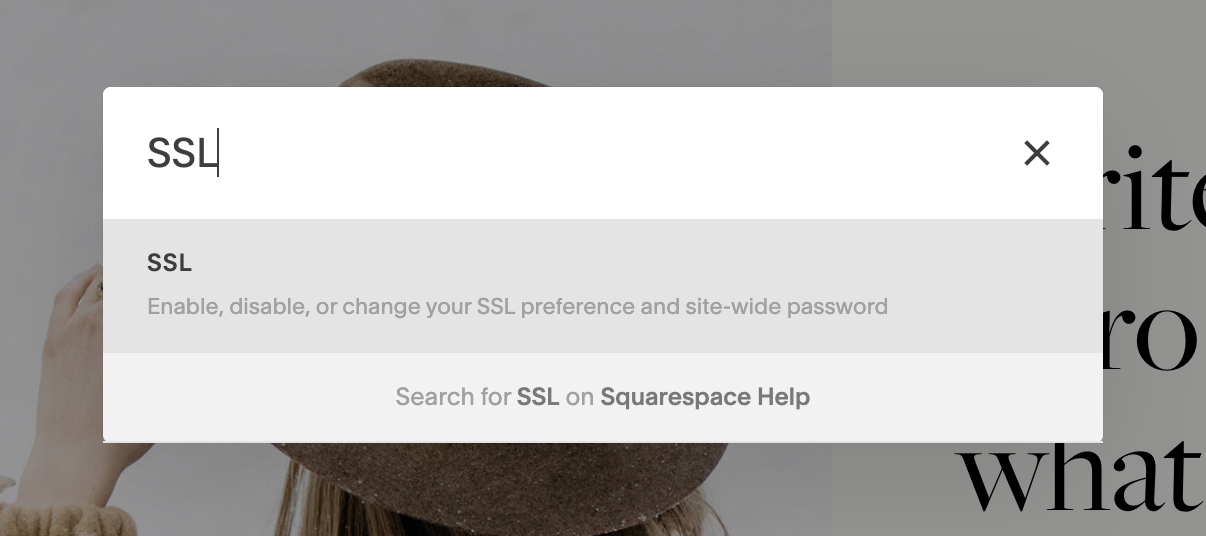
Then, once you’re in the SSL Panel, select the Secure (Preferred) and HSTS Secure options.
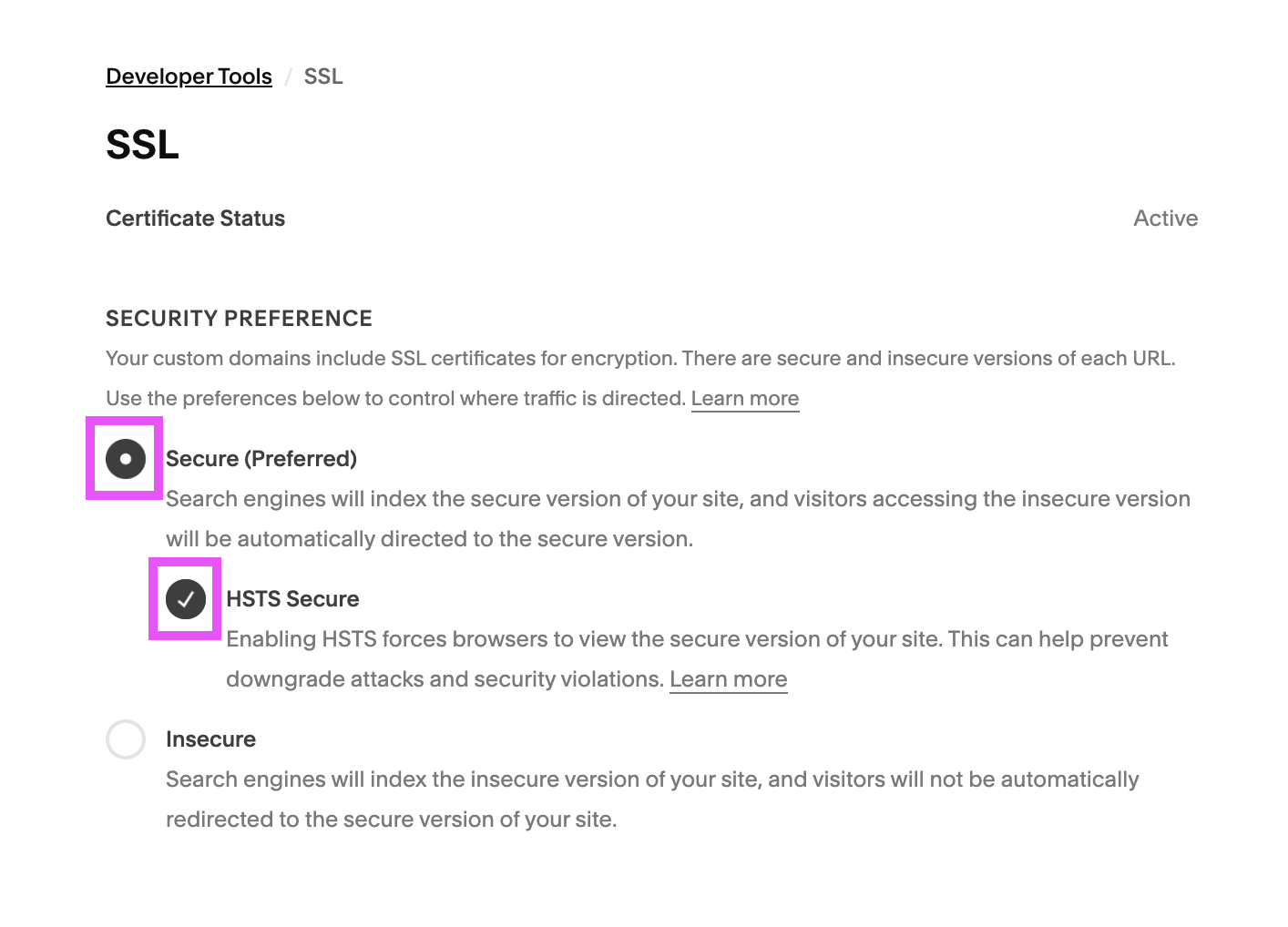
Squarespace recommends that if you’re using the Secure setting, you also keep HSTS enabled as this is what actually encrypts the connection and prevents potential attackers from accessing or impersonating your site. Having your website HSTS secure also prevents that “not secure” or “not private” error message from popping up.
And that is it! If you’ve done everything correctly, you’ll see Active next to “Certificate Status” and from there, Squarespace will do the rest.

SSL Certificate Troubleshooting
If you do ever notice that your browser is reporting your domain connection as “not secure”, this isn’t great and something you should look into ASAP. This message usually means one of two things:
You don’t have an active SSL certificate (in which case, follow the steps above)
There’s an issue with your domain connection and/or it might not be eligible for an SSL certificate
To check your domain settings, navigate to your main Squarespace dashboard and click Domains in the top left corner.
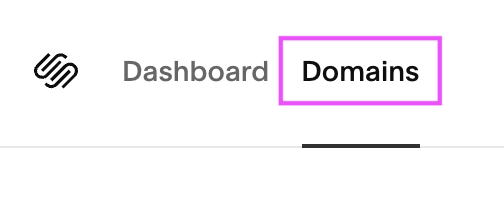
From here, choose the domain that you’re concerned about. If there is an issue with your domain, you’ll immediately see a red warning box with links to help you learn more and troubleshoot!
Once the issue has been fixed, the warning will go away along with the “not secure” message. Just keep in mind that new SSL certificates may need up to 48 hours to take effect, so if you don’t see a change right away, give it a couple of days.
What Other Security Features Does Squarespace Have?
Now, SSL certificates aren’t the only thing Squarespace offers to protect your website (just in case you needed another reason to love them).
Let's take a look at some of the other features the platform provides:
Two-Factor Authentication
Security starts at login! Squarespace allows you to add an extra layer of defense from unauthorized access by enabling two-factor authentication (2FA) to your account.
You're able to set up a passkey, an authentication app, or a text message as your preferred 2FA method, and whenever you take a sensitive action on your account (changing a password, credentials, etc.), Squarespace will ask you to reauthenticate using your chosen 2FA method.
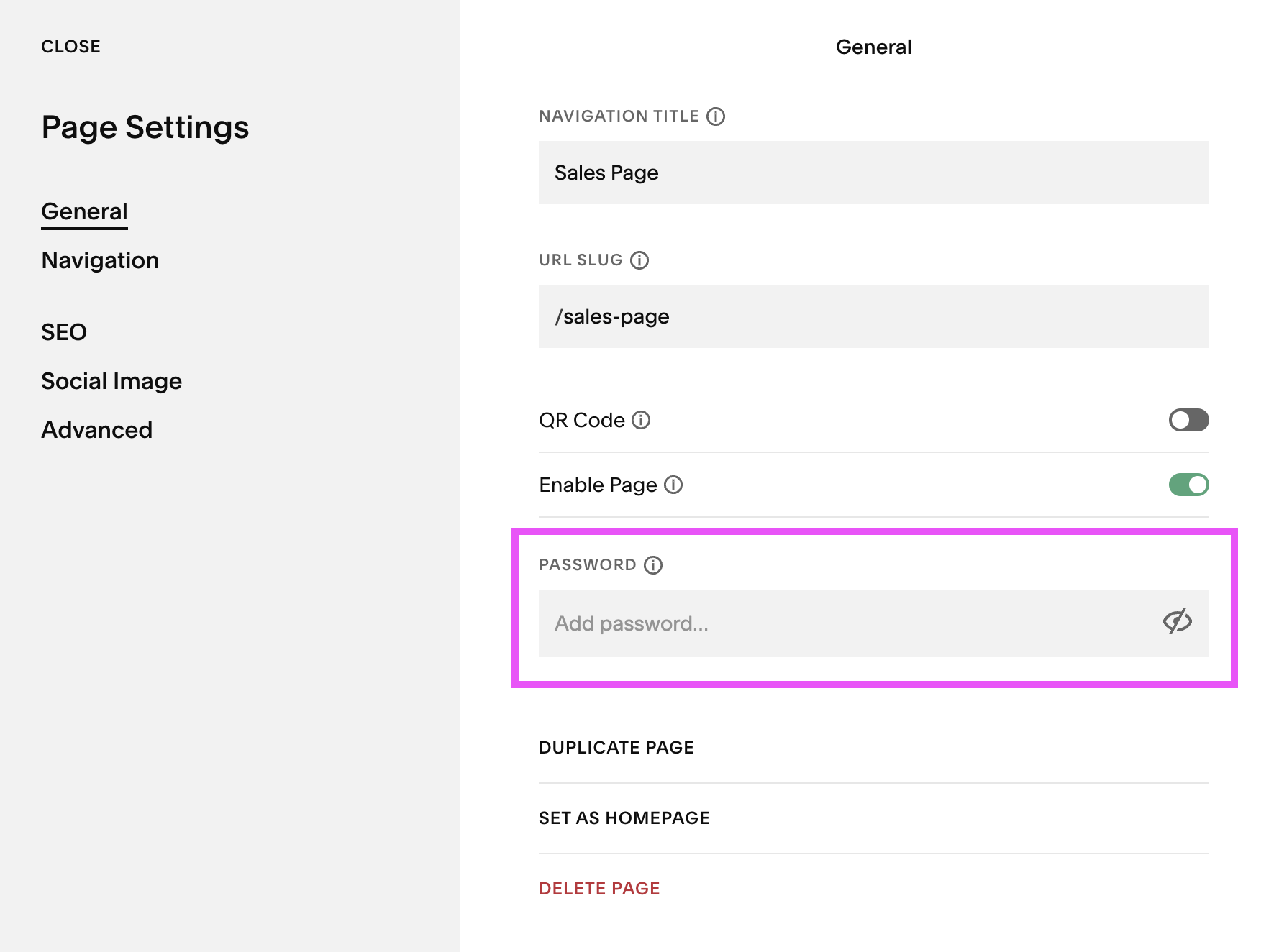
Password Protected Pages
If you're looking for a way to protect specific content on your website, Squarespace allows you to hide individual pages behind passwords to keep them from being publicly accessible.
Password protected pages are perfect for creating courses or gated content that you only want a specific audience to consume, or even for creating "in progress" work or system pages that only you and your team use. Adding a password to any page will ensure that no one is able to view something they aren't meant to see.
Login Activity
Another cool feature that Squarespace offers is the ability to review your account's active login sessions so that you can quickly spot suspicious activity or devices you don't recognize.
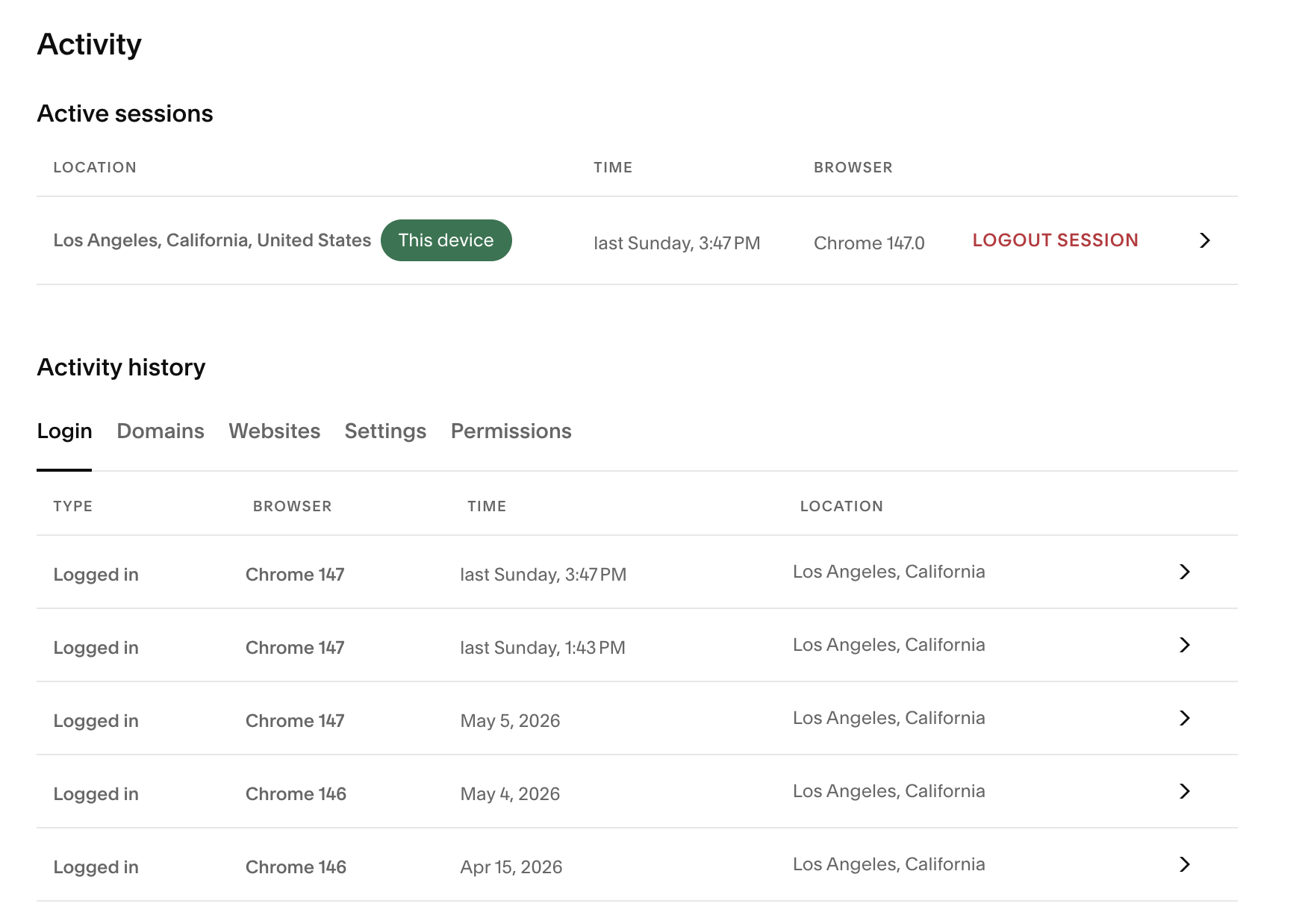
If you see anything that looks out of the norm you can force a device to log out by clicking on the red "Logout Session" option. Then, the next time that device tries to log back in, it will need to re-enter login details.
It might be a good idea to do this if you've logged into your account from a public computer or, of course, if you don't recognize the login at all.
You can also view other things here like:
Login attempts
Changes to domain info
New website and domain creations
Changes to your settings
Additions or removals of contributors
Cookie Capabilities
If you're not familiar with cookies, they're small pieces of data that websites store on a device. Cookies help websites to remember the preferences of visitors and can help provide insight into how people are interacting with different features.
Squarespace allows you to easily add a customizable cookie banner to your website so that visitors are aware there are cookies present, and can either accept or deny the tracking.
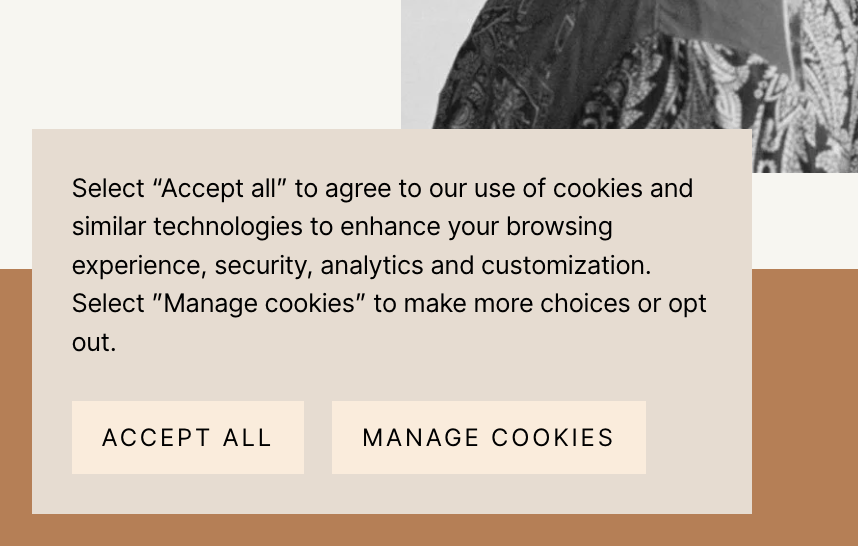
This is especially important to look into because certain laws actually require the presence of a cookie banner on your website!
Top of the Line Support
And last, but not least, Squarespace offers top tier support when it comes to security issues or concerns.
If you ever notice a security vulnerability or are worried that someone has had unauthorized access to your account, the Squarespace team will investigate and follow up with you if necessary.
And in addition that, Squarespace is a closed source platform, which means that only the people at the very top of the chain have access and can tweak functions. This makes your website extra safe and secure and allows you to feel confident that not just anybody is poking around your site.
Using Squarespace allows you to feel confident that, not only is your site in good hands, but there are real people who care and are there to help if things do go wrong!
Ultimately, securing your Squarespace website is SO easy. There’s really no excuse not to do it and your visitors and SEO ranking will thank you! And, if you’re looking for a more in-depth explanation of SSL or some more information on the different settings, check out this post from Squarespace.
Want more Squarespace tips? Check out these posts:
How to Move Your Website from WordPress to Squarespace (Step-by-Step Guide)
Should you use Squarespace Email Campaigns? Pros, Cons, and Alternatives
How to Design and Optimize Your Homepage for Better Results
The Ultimate Website Pre-Launch Checklist (Everything to Do Before You Hit Publish)
How & Why you Should Create a Custom “404 Not Found” Page in Squarespace
Did you like this post? Pin it to Pinterest!